
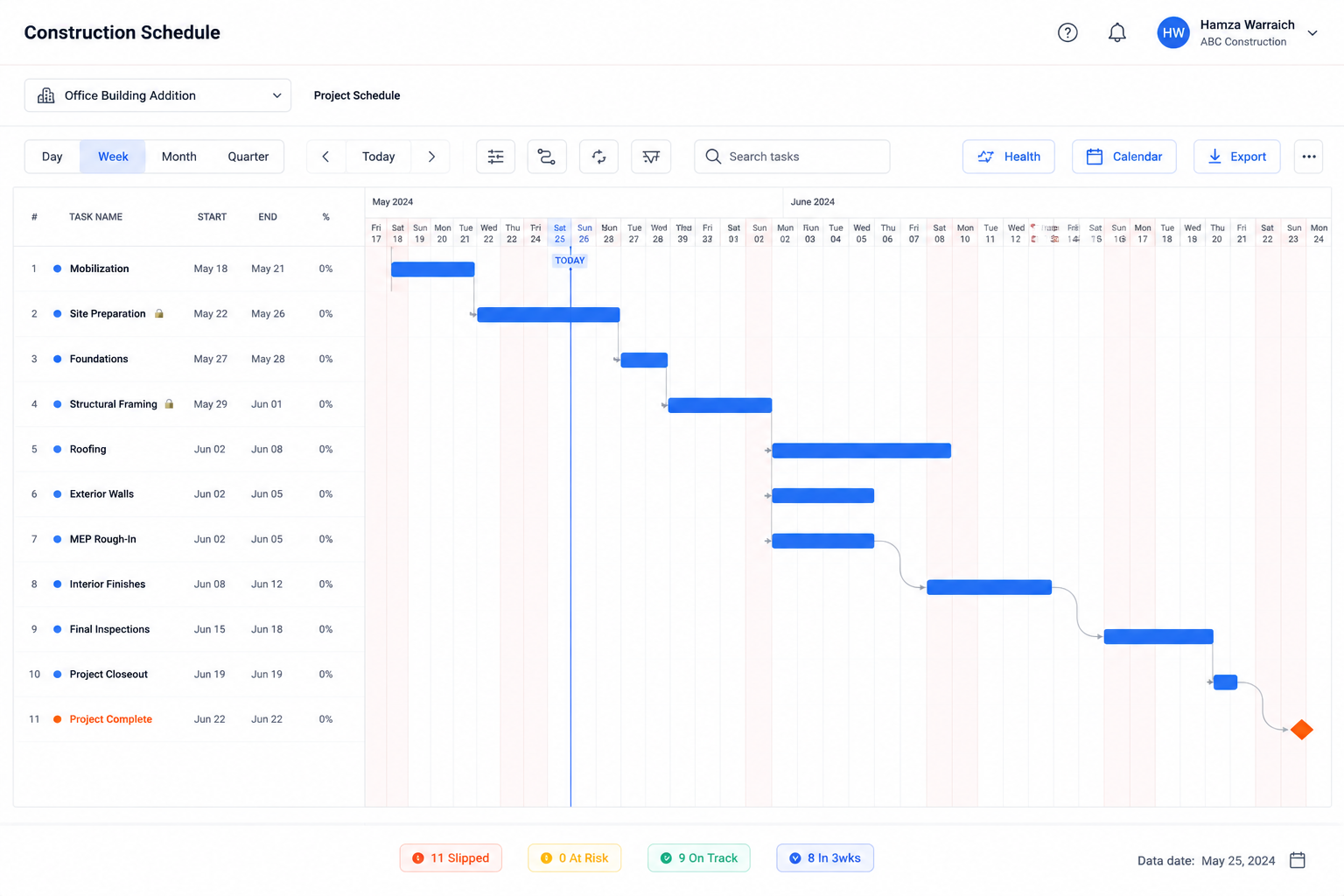
Buildend gives GC teams a live view of float, slippage, and resource load — connected directly to the project budget so every delay comes with a cost attached.
By the time a two-day slip shows up in a schedule review, it's already a two-week problem. Without real-time float tracking, you're always managing consequences instead of preventing them.
Your PM watches the schedule. Your accountant watches the costs. Nobody's watching what a three-week delay actually costs — until the job is over and the margin is gone.
Supers pull three-week schedules together in Excel every Friday with no connection to the master. When something changes, nobody knows which version is current or what's driving the update.
Build the master schedule, track float in real time, push lookaheads to the field, and see the cost impact of every delay — before it’s too late to course-correct.
Build CPM schedules that show exactly which activities drive your completion date. Know which tasks you can't afford to slip and where you have room to absorb without pushing the job.
Connect schedule milestones directly to budget line items. When a phase slips, the cost impact surfaces immediately — not at month-end when the damage is already done.
Lock in your original schedule as the baseline and track variance against it continuously. See where you've slipped, by how much, and what's driving it before the owner asks.
Generate two- and three-week lookaheads directly from the master schedule. Supers get a focused view of what's due now without managing a separate document or rebuilding it from scratch.
Monitor free and total float across every activity. Get early warning before a task burns through its float and lands on the critical path with nowhere left to go.
See how labor and equipment are loaded across the schedule. Spot overallocated resources before they create a bottleneck and make adjustments before the work is due.
See how Buildend helps GC teams build tighter schedules, catch slippage early, and keep the timeline and budget moving together.